Why crypto prices rebounded on Wednesday.

There’s never a dull moment onchain. Here’s what you need to know this week:
Crypto markets saw a rebound. Also, Missouri moved a BTC reserve bill to committee, and investment advisors grew their BTC ETF positions.
How market watchers have viewed crypto’s downturn. A look at the ways some of the biggest players are positioning themselves.
The amount earned by a solo bitcoin miner with just $75 worth of mining power. And more key stats from around the cryptoverse.






MARKET BYTES
After another rough week, crypto markets saw a rebound
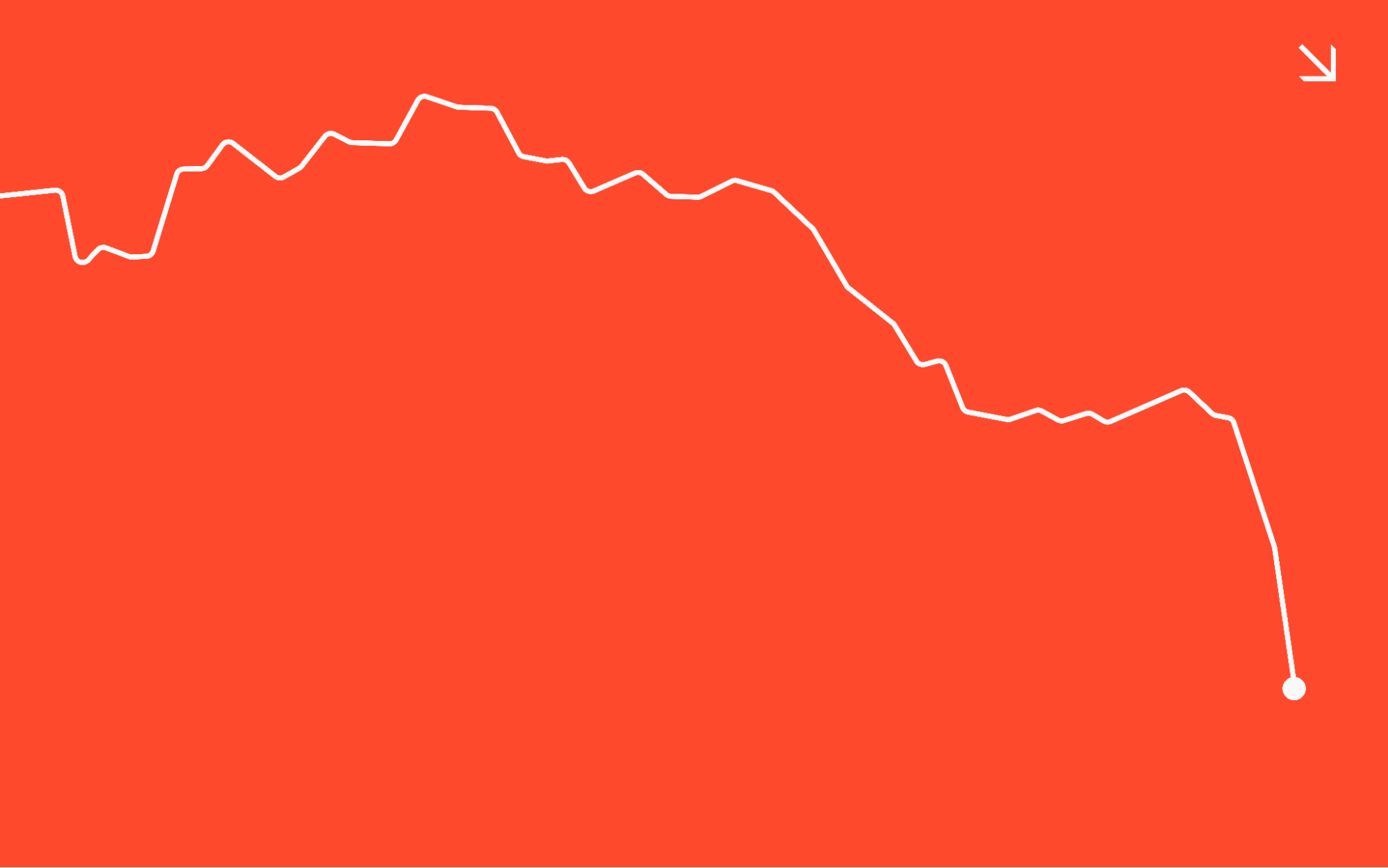
After dipping below $63,000 earlier this week, BTC — alongside ETH, SOL, DOGE, and many crypto-related stocks — saw a significant rebound on Wednesday, charting as high as $69K.
What had been spooking markets? A sharp increase in uncertainty in multiple areas, including: the Supreme Court nixing the Trump administration's tariff plans; the rollout of a 10% across-the-board global tariff the administration unveiled as a response; increased geopolitical tensions in the Middle East, and sharp dips in many tech stocks over fears that AI tools will rapidly displace conventional software.
But by Wednesday, some of those factors were seeming less scary. As CoinDesk put it, "improving risk appetites" helped boost the S&P 500, Nasdaq 100, and most major tokens; rising crypto prices wiped out around $300 million in leveraged bearish bets; and spot BTC ETFs had flipped positive, tallying more than $250 million in new capital on Tuesday.
Here are some other key stories in the news this week.
Missouri passes BTC reserve bill to committee
Missouri lawmakers took a major step towards becoming the latest state to create a strategic bitcoin reserve late last week, by advancing House Bill 2080 to the House Commerce Committee, where it awaits public hearings and an eventual committee vote.
“Under HB 2080, the state treasurer would be permitted to accept gifts, grants, donations, bequests, or devises of bitcoin from Missouri residents and governmental entities,” noted Bitcoin Magazine. “The bill also authorizes the treasurer to purchase and hold bitcoin using state funds, though the framework emphasizes voluntary contributions as the primary funding source.”
The bill also requires any BTC acquired by the state to be held in cold storage for at least five years. Another provision would allow state agencies to accept crypto for taxes, fees, and other payments.
If the bill passes out of committee, it would face a vote on the state House floor, a Senate review, and signing by Gov. Mike Kehoe.
Texas hold ‘em… Texas became the first state to fund a BTC reserve last year. New Hampshire has a similar law on the books, and this week Arizona lawmakers advanced a bill that would allow the state to hold BTC, XRP, and other tokens. A number of other states are considering similar bills.
As hedge funds left BTC ETFs, investment advisors grew their positions
In the last few years, as BTC raced to one new all-time high after another, one of the major contributing factors was the blockbuster rise of spot bitcoin ETFs, which allowed institutional investors to easily access crypto markets for the first time.
Hedge funds made up a significant portion of that institutional investment, in part because a quirk in the way that spot ETFs and bitcoin futures were priced allowed them to generate easy returns.
But alongside sharply falling prices in the last five or so months, the “bitcoin basis trade” stopped being such a safe bet. As a result, “aggregate Bitcoin ETF allocations” among major hedge fund holders dropped 28% from the third to the fourth quarter last year, according to Bloomberg.
“The unwind is visible in regulatory filings,” noted Bloomberg. “[Major hedge fund] Brevan Howard overhauled its position in BlackRock’s iShares Bitcoin Trust, becoming the largest seller of the spot ETF in the fourth quarter. Its stake fell about 86% to 5.5 million shares, reducing the value of its spot position from about $2.4 billion to $275 million.”
Silver lining… Even as hedge fund investment in BTC ETFs has unwound, another major class of pro traders has doubled down. “Investment advisers increased their aggregate IBIT positions every quarter over the past year, resulting in a 145% year-over-year rise,” Bloomberg reports. Those traders are also more likely to stick around, because, as one analyst noted, “[they] don’t typically trade around short-term volatility.”
CHAIN REACTION
How top market watchers are responding to crypto’s downturn
Amid crypto’s worst bearish stretch in years, there remain more questions than answers about where things are headed.
But what signals, if any, are market participants giving us about what they think could happen next? We took a look at analysts, crypto treasury firms, institutional holdings, and options traders to help understand how some of the biggest players in the crypto market are positioning themselves.
Here’s everything you need to know.
Analysts think the bottom isn’t in yet – but it’s close
Despite bitcoin sitting down around 50% from its all-time high of $126,000, some analysts believe there could be one more volatile move down for bitcoin this year before a recovery.
While bitcoin’s initial slide below $70,000 on Feb. 5 was “shocking,” said Bitwise’s CIO Matt Hougan, he doesn’t think it was the “final cathartic bottom,” adding that he “wouldn’t be shocked to see another event like that at some point in the future.” That said, Hougan believes bitcoin should start to recover at some point this year: “We’re going to get out of it this year, but we’re still in the depths of it,” he said.
Vetle Lunde, head of research at K33 Research, also believes that we’re near a bear-market bottom. He cautioned, though, that what follows the bottom likely won’t be a quick reversal.
"Current conditions closely resemble late September and mid November 2022, periods near the bear market bottom that were followed by extended consolidation," Lunde wrote.
Whenever markets do recover, though, Hougan says that he believes rising institutional adoptions and strengthening fundamentals, especially in areas like DeFi, will be the catalysts.
"One of my highest-conviction beliefs is that the next crypto bull market will be focused on fundamentals,” Hougan said, adding that investors want to see user growth, strong revenues, and utility. “DeFi fits the bill.”
The biggest crypto treasury firms still haven’t stopped buying
It takes conviction to keep buying crypto despite being down billions. And that’s exactly what Michael Saylor of Strategy, and Tom Lee of BitMine Immersion Technologies, are doing.
Saylor’s company, the first and biggest crypto treasury firm, just made its 100th purchase of BTC and has spent more than $54 billion on the token since 2020. Despite sitting on an unrealized loss of around $10 billion, Saylor seemingly has no plans to stop accumulating. While acknowledging crypto’s current bearish phase, Saylor hinted that he believes in a turnaround. “Spring is coming — and bitcoin is winning,” he said.
BitMine, which is more than halfway toward its goal of owning 5% of Ethereum’s supply, is sitting on a loss of around $8 billion. That didn’t stop the firm from adding $98 million worth of ETH last week.
Overall, BitMine has spent more than $16 billion on ETH since last spring. “In the midst of this 'mini crypto winter,' our focus continues to be on methodically executing our treasury strategy and steadily acquiring ETH and in turn, optimizing the yield on our ETH holdings,” said Lee.
Crypto ETF demand is slowing, but it isn’t catastrophic
ETF investors — who were a durable source of demand for the last two years — have been cooling their interest in recent weeks. Globally, crypto ETFs have seen around $4 billion in withdrawals over the past five weeks — the longest withdrawal streak in a year — with bitcoin seeing $215 million in outflows last week, and Ethereum seeing around $36.5 million in outflows.
Analysts say a combination of geopolitical factors and tariff news, plus fewer ETF purchases from institutional investors, helps explain the recent string of outflows. “The combination of persistent redemptions and thinning volumes suggest institutional engagement has cooled materially as prices remain in a downturn,” said The Block.
While institutions may be reducing their exposure to crypto, they’re not exiting the market in droves. According to the most recent 13F filings, which show the holdings of institutions managing more than $100 million in assets, institutional holdings of BTC ETFs fell by around 3.5% last quarter, despite bitcoin’s 23% decline in Q4 of 2025.
Institutions still hold around 40% of all bitcoin ETF shares, though, up from 30% at the same time last year, a sign that while short-term demand has slowed, institutions appear prepared to HODL.
Options traders think bitcoin could hit $75,000 — or $40,000
Options markets are often a proxy for what traders might be thinking. In an options trade, traders are essentially trading based on when they think bitcoin might hit a certain price, with a bullish options trade being a “call,” while a bearish one is a “put.”
As of Tuesday, there was $7.4 billion in trades tied to Feb. 27, with the most popular position being bitcoin hitting $75,000 and the second most popular trade predicting that bitcoin will dip all the way to $40,000. There are 63,547 calls on the market, versus 45,914 puts, indicating that more people have bullish outlooks.
But the concentration of capital in puts, says CoinDesk, “highlights clear demand for downside insurance.”
NUMBERS TO KNOW
$1 trillion
The potential amount in U.S. treasury bills that could be purchased by stablecoin issuers between now and the end of 2028, according to analysts at Standard Chartered. T-bills are what stablecoin issuers use to back the tokens they issue, and “stablecoin issuers are becoming the biggest buyers of U.S. T-bills," the firm said.
$10 billion
Predicted yearly revenue — up from around $3 billion currently — that prediction market firms (including Kalshi and Polymarket) could be making by 2030, according to a new report from Citizens Bank.
$200,000
Approximate value of BTC earned by a solo bitcoin miner on Tuesday, after renting just $75 worth of mining power. According to Decrypt, “such an event is likely to happen only once every 21 years.”
TOKEN TRIVIA
Which of the following is a Bitcoin layer 2?
A
Lightning Network
B
Base
C
2Bit 2Furious
D
Shardnado
Find the answer below.
Trivia Answer
A
Lightning Network
Coinbase Bytes
Your weekly digest of crypto news
Learn how we collect your information by visiting our Privacy Policy